Vetonlm load management FAQ

Is there a monthly fee or subscription?

No. The vetonlm controller runs locally on your site and is included with the hardware. There are no monthly fees, no subscription tiers, and no per-charge-point licence — you own what you buy. Smappee and similar systems gate equivalent features behind a paid subscription; with vetonlm everything stays on your network and stays yours.

Vetonlm is the vetonlm controller — a small, always-on controller installed next to your chargers that decides, second by second, how much power each car gets. It lets you run more chargers than your connection would normally allow, charge as cheaply and as green as possible, and never trip your main fuse or set an expensive power peak. These answers explain, in plain language, what it does and how to live with it day to day.

What is Vetonlm, in plain words?

It is smart load management for electric-car chargers. Think of your electricity connection as a single pipe of a fixed size: if every car drinks at once, the pipe can’t cope and the main fuse trips. Vetonlm is the intelligent valve — it shares the available power fairly across all the cars, gives more to whoever needs it, and quietly eases back when the building is busy, all automatically.

What do I need to run it?

The vetonlm controller — a small, always-on controller installed next to your chargers and plugged into your network. Vetonlm is a single program that runs on that controller. Your installer sets it up once; after that it simply runs.

Does it need an internet connection?

No — not for anything important. Every decision that keeps you safe and controls your bill is made locally on the vetonlm controller, on your own network. The internet is only used for two optional extras: today’s electricity prices (for dynamic-tariff contracts) and a weather-based solar forecast. If your internet drops, charging keeps working perfectly; it simply can’t see tomorrow’s prices until the connection is back.

Which chargers does it work with?

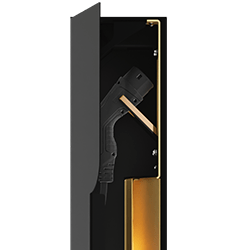
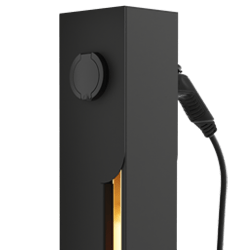
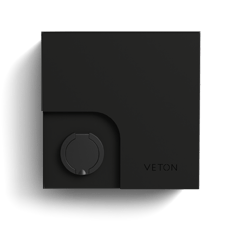
Veton and Phoenix Contact CHARX chargers. Vetonlm replaces the basic load management built into those chargers with something far smarter, and it scales from a single home charger up to 100+ charge points on one site.

Who is it for?

  • Offices, depots, hotels and fleets — anywhere with more chargers than the connection can run at full power at once.
  • Apartment buildings and larger homes that want solar-first, cost-aware charging.
  • Homeowners with solar panels and a home battery who want the car to charge from the sun without fighting the house battery.
  • Anyone already using another system who wants proof of the savings before switching — see the shadow trial below.

How does it decide who gets how much power?

It looks at how much power your building or home is already using — lights, machines, the heat pump — and only shares out what is left over. It then splits that fairly across every car plugged in and asking to charge. If a car is nearly full and slows down on its own, Vetonlm notices and hands the spare power to the other cars instead of wasting it.

One car charges slower than another — is something wrong?

Usually not. Vetonlm gives more power to cars that can use it and less to cars tapering off near a full battery, while keeping things fair so nobody waits forever. On a busy site with limited power everyone charges a little slower than they would alone — that is the whole point: it shares one connection safely instead of tripping the fuse. Once a minute it runs a fairness round, briefly easing back the car that has taken the most energy so a waiting car can get going, then carries on. No car is left permanently starved.

Will it ever trip my main fuse?

No — keeping you under your limit is its main job. You (or your installer) tell it how big your connection is, and it never lets the cars push you over that, even accounting for the rest of the building’s usage.

What charging modes are there?

You choose how each group of chargers behaves, and you can mix modes on one site — for example visitor parking on smart-charge while staff bays charge on solar. The modes are:

  • Fuse-limit — simply share the available power fairly and never go over the limit. A good safe default.
  • Capacity tariff — protect against the peak-power fee. In Belgium part of your bill is based on your highest 15-minute power peak each month; this mode watches that rolling average and gently holds the cars back so you never set an expensive peak.
  • Solar-only — charge only from your solar surplus. When a cloud cuts the surplus, charging pauses. You buy zero grid power for the car.
  • Solar + minimum — always keep the car charging at a low minimum and add extra whenever there is solar surplus.
  • Smart-charge — the flagship mode. It learns your routine and charges during the cheapest, greenest hours while still being ready when you need to leave.

What does smart-charge actually do?

It quietly learns when you usually plug in, how long you stay and how much energy you need. From that it works out the cheapest, sunniest hours to charge — and makes sure the car is ready by the time you normally leave. So instead of charging the instant you plug in, when power may be expensive, it might wait for cheap overnight hours or a sunny midday window, as long as it can still finish in time. You don’t enter a plan.

Do I have to tell it when I’m leaving?

No. It works out your typical departure from past sessions. If you do have an unusual day and need to leave much earlier, you can set a “leave by” time and it treats that as the final word, making sure you’re charged by then.

How does it know it’s my car?

Two ways. If your site uses charge cards (RFID), it learns a separate routine for each card, even if you park in different spots. If your site has no cards, it learns by the parking spot instead — most people use the same bay each day, so that works almost as well.

How long before it’s “smart”, and will my car be ready?

It improves over days and weeks as it sees more sessions. The first few times it uses safe, generous defaults so you are never left short; after that the predictions tighten and the savings grow. It is built to err on the side of “ready”: it aims a little above your average need with a buffer, and if your battery is emptier than usual it keeps charging past the usual target rather than stopping early. If you ever ask for more charge than is physically possible in the time available, it charges at full power and shows a clear “won’t quite make it” warning, so there are no surprises.

Can I make a car charge at full power right now?

Yes. A car or a charge card can be set to Priority, which skips the learning and scheduling and just charges as fast as fair-sharing allows. Handy for visitors or for a staff member with an unpredictable day.

Can it charge my car from solar, even without an inverter connection?

Yes — and this is one of Vetonlm’s standout tricks. Normally, charging from solar needs a direct link to your inverter. Vetonlm can instead learn your home’s solar and usage pattern from the main electricity meter plus free weather data. Over a handful of sunny days it works out how much your panels produce and starts the car the moment the sun delivers — no inverter hookup required. If you do connect an inverter, it uses those exact readings instead.

I have a home battery — will the car drain it?

Only if you want it to. You pick one of three simple policies:

  • Use freely — the car charges as fast as allowed and the battery helps out like it would for any household load.
  • Smart — the car prefers solar but may lean on the battery during the most expensive grid hours, never below a reserve you set, to dodge peak prices.
  • Protect — the car only ever uses spare solar and never makes the battery discharge, so it stays full for the house.

You can also keep a reserve back for the house (oven, hob, heat pump). Vetonlm tracks the battery level continuously and eases the car up and down smoothly rather than cutting it off abruptly.

How does it actually save me money?

  • Cheaper hours — on a dynamic-price contract, smart-charge shifts charging to the cheapest hours of the day.
  • Your own solar — solar modes use free sunshine instead of bought electricity.
  • Avoiding the peak-power fee — capacity-tariff mode keeps your monthly power peak down, a big line item on Belgian commercial bills.

Does it work with my electricity contract?

Yes. It supports the three common types: dynamic / day-ahead (prices change every hour — it charges in the cheapest hours), fixed (one flat rate — it still optimises around solar and peaks), and day/night (the Belgian two-rate setup — it knows your cheap window, weekends included). You just tell it which contract you are on.

Can I see the savings before switching from another system?

Yes — this is the shadow trial, unique to Vetonlm. Your installer places a vetonlm controller on your network in a watch-only mode: it works out every decision it would make but does not touch your chargers at all. After about a month it produces a clear report with your estimated yearly savings — on energy cost, on the peak-power fee and on solar use — as a one-click PDF you can keep. If you decide to switch on, the same vetonlm controller simply takes over; nothing to reinstall.

What happens if the vetonlm controller crashes or loses power?

You stay safe. The chargers have an independent hardware safety net. If Vetonlm stops talking to them for any reason — a crash, a power cut, an unplugged controller — every charger automatically falls back to a safe low level (typically a gentle 6 amps) within about 30 seconds, entirely on its own hardware watchdog, with no software involved. A software problem can never make a charger run away.

Will it constantly fiddle with my charging?

No. It aims to be invisible. It nudges power up and down smoothly, avoids flip-flopping, and only steps in to keep you safe, keep you under your limit, or save you money. It needs no babysitting or regular maintenance: it runs on its own and upgrades cleanly. There is a web dashboard you can open if you’re curious, but you don’t have to.

Does it track who charges and when?

It learns charging routines to do its job, but it is careful with identity. If your site uses charge cards, the card number is hashed (scrambled) before it is stored — the original number never lands in the database. Everything stays on your own vetonlm controller, on your own network; it is not sent to a cloud. Privacy-friendly by design.

Is there a screen I can look at, and who sets it up?

There is a web dashboard you open in any browser, including your phone. It shows live power flow, what each car is doing, the plan for the day, your sessions and — if you ran a shadow trial — your savings report. Your installer does the one-time setup (finding the chargers, sorting which charger is on which phase, choosing modes and limits). After that it is hands-off; day-to-day tweaks like naming a charge card or switching a car to Priority are simple toggles in the dashboard. You can even run different modes per group, all under one capacity-tariff limit, and give each charge card a friendly name like “Alice — sales”.

My car isn’t charging — what should I check first?

  • Is the car actually asking to charge? Some cars sleep or stop when full or scheduled — check the car’s own settings.
  • Is the site very busy? Your car may be getting a small share for now; it should pick up as others finish.
  • Is it in solar-only mode with no sun? In that mode, no sun means it pauses on purpose — switch to solar + minimum or smart-charge if you need to charge regardless.
  • Still stuck? Your installer can open the dashboard, which shows a plain-language reason for each charger’s current power level.

It charged in the middle of the night, or the dashboard says “learning”. Is that a problem?

No — both are normal. Charging overnight is smart-charge doing its job: it found cheaper or sunnier hours and still made sure you would be ready by your usual departure. If you needed it sooner, set a “leave by” time or switch the car to Priority. A “learning” status or low confidence simply means Vetonlm hasn’t seen enough of your sessions yet; it uses safe defaults in the meantime and gets sharper over the following days and weeks.